


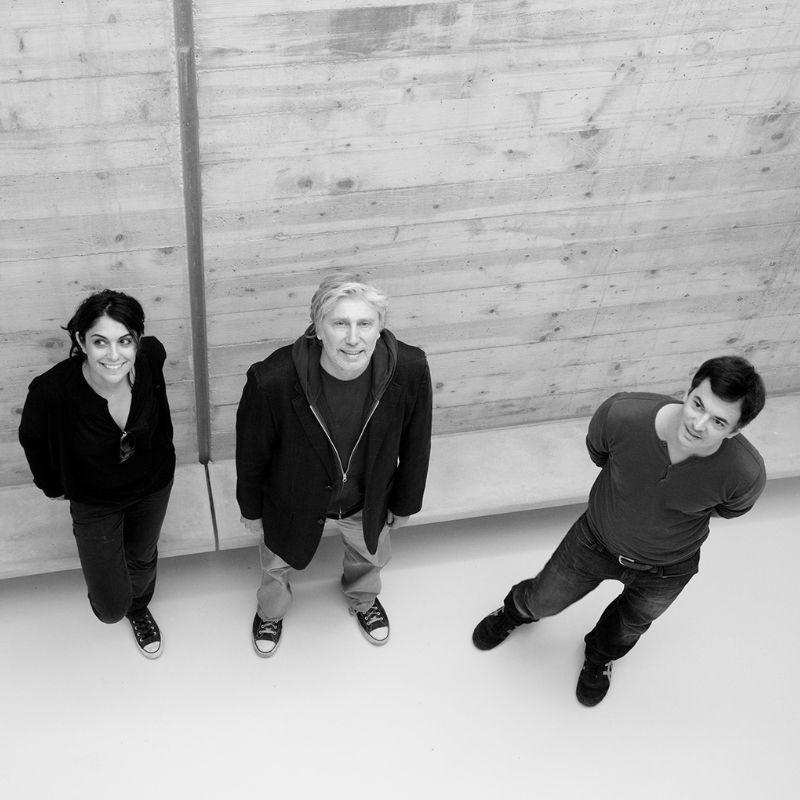
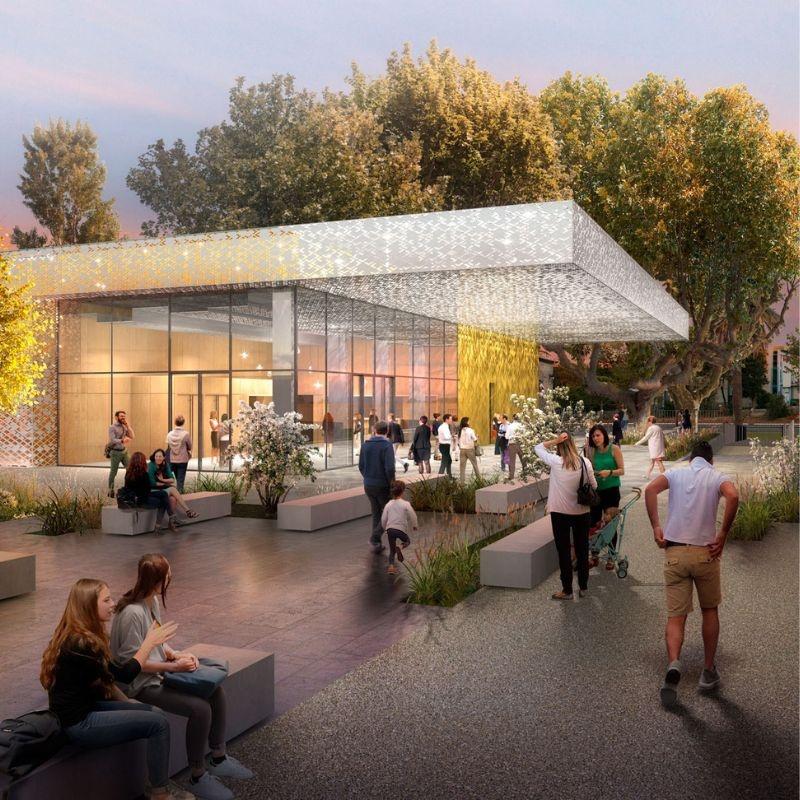
This work and life partnership was awarded the ArchiCOTE 2013 competition's Public Amenity Prize for the Pôle Culturel Auguste Escoffier in Villeneuve-Loubet. Interview.
Do you split your work on projects in any particular way?
Céline Bouzat: He talks, I think…
Christophe Erades: Let's say we both contribute to the project but not at the same time. We've been working together for nearly 20 years and have very similar tastes in architecture and ways of thinking, so when one of us goes off-track the other quickly pulls them back into line! Because we're on the same wavelength, that critical eye helps us refocus on the essentials.
An architect who has influenced your career?
CB: The first architect to impress me was Japan's Tadao Andō; it was the first time I'd come across designs in which the work on volumes and space was so beautiful. I'd never seen that before.
CE: For me it's American architect Louis Kahn. His is a manifesto architecture that has influenced entire generations and moved the discipline's goal posts. An architectural prep school where we're taught to read and write.
Two architects for whom a raw material, in their cases concrete, forms the basis of each project.
CB: Yes, we like working with materials – metal, stone, wood, glass – without transforming them too much. A material's intrinsic qualities, whether aesthetic or structural, induce the quality of the finish and the final aspect: shapes, sections, colours. Everything is connected because there's a very specific way of utilising each material. Producing quality architecture involves respecting that coherence.
CE: Unfortunately, 85-90% of houses in France aren't built by architects. So we have some scandalously poor, uncultured architecture such as the neo-Provençal that uses concrete arches over windows 2m wide. Using an arch to span such a small space isn't at all necessary, in fact it's a structural and aesthetic heresy!
So the aesthetic dimension of projects such as the Pôle Culturel Auguste Escoffier, which won the ArchiCOTE 2013 prize, results from this coherent use of materials?
CB: Yes, but not only from that. It's a whole. The final expression is simply a broader combination of various elements: function, orientation, access, light, space etc. But what is certain is that formal language doesn't dictate our approach.
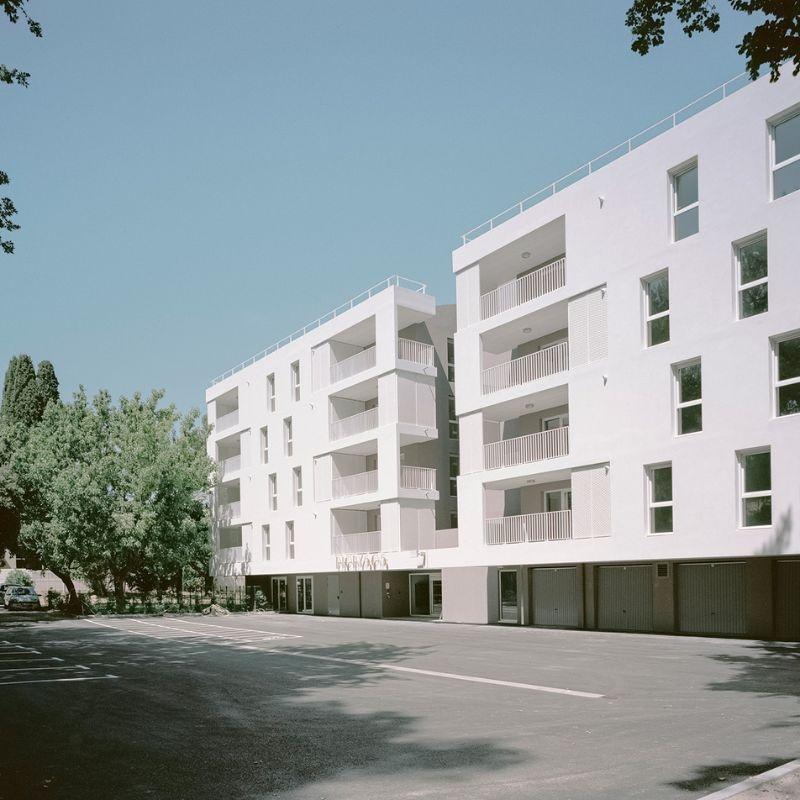
CE: What we focus on above all else is the space, especially when we work on social housing. The question I often ask myself is how to inject added-value into children's quality of life. When we first started out we were asked to turn an office building into social housing, on a very tight budget. We suggested down-grading the internal fittings – laying soft flooring instead of tiles, for example – so as to free up some money to create balconies, which weren't initially planned. We felt it was vital to give children the opportunity to play with their Lego out in the sun rather shut up in a room. That was the real deal! It's a way for us to make lives that aren't always very happy a bit better.
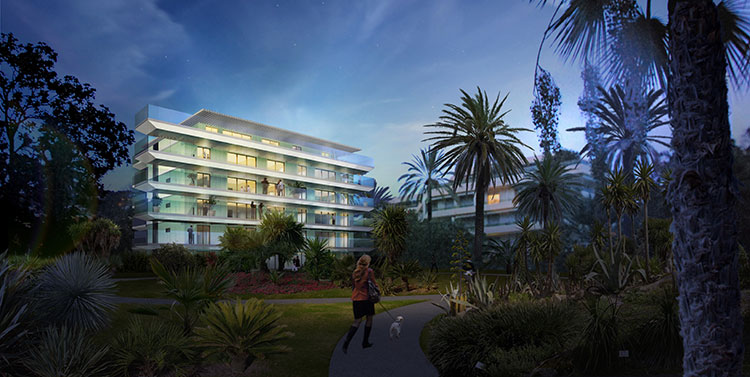
You've just won a private developer's competition to build luxury housing in Cannes. How can you inject added-value into the quality of life of a development like that?
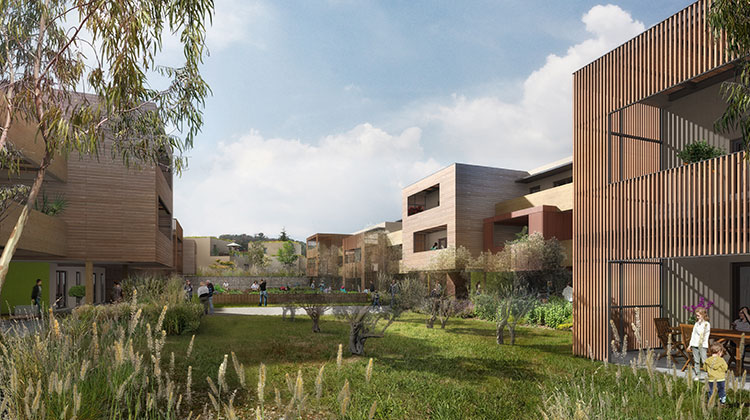
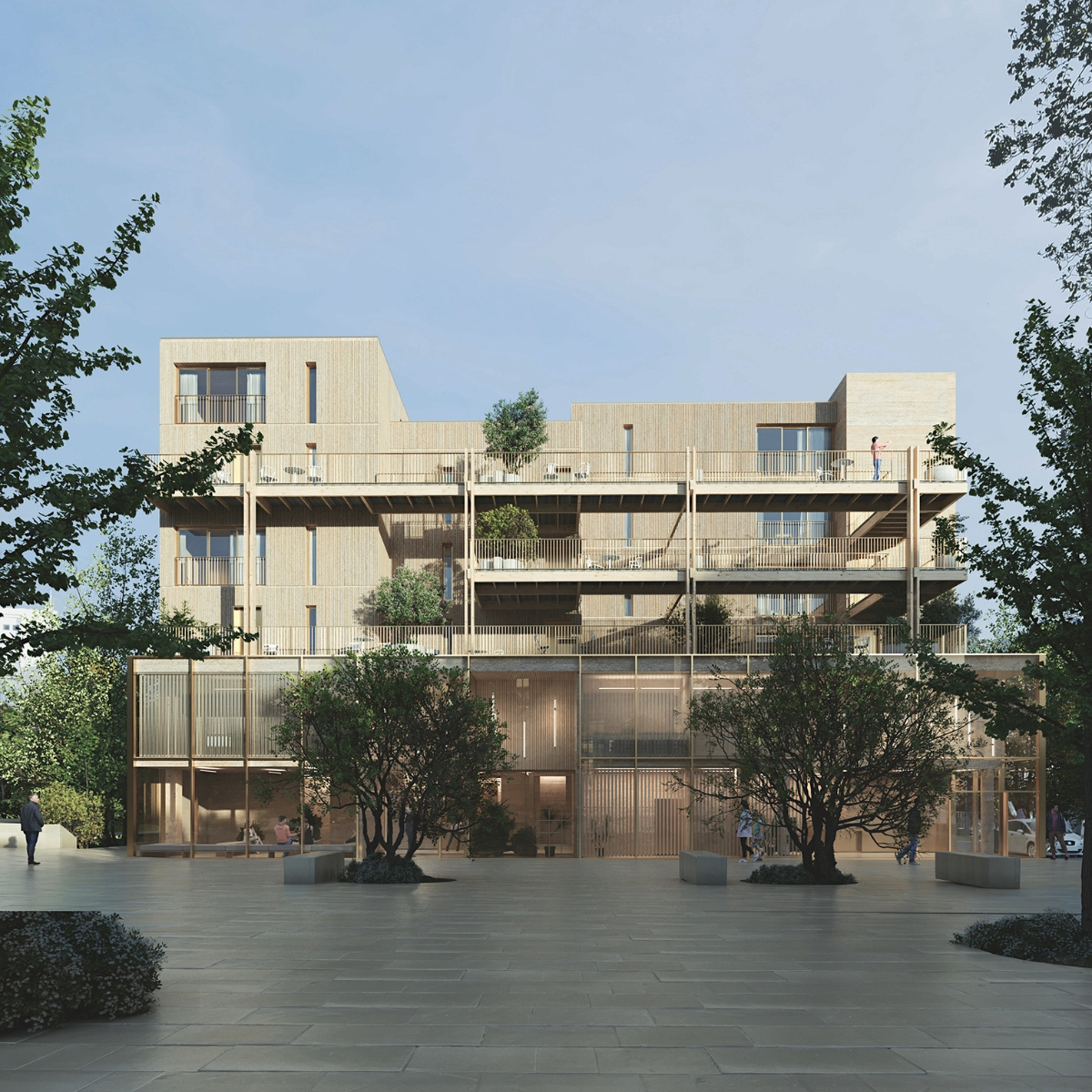
CB: Marble, plants, hi-tech lift, CCTV... but then again to us that is all secondary. The true added-value will be to make the most of an outstanding situation since the building stands opposite a magnificent garden and enjoys a 180° view of the sea. We're going to create big outdoor spaces so as to connect the residents permanently with their lovely surroundings.
CE: But to avoid the upper floors casting cave-like shadows on the lower ones, 90% of these big terraces will be glass. A real technical challenge!
Your other projects?
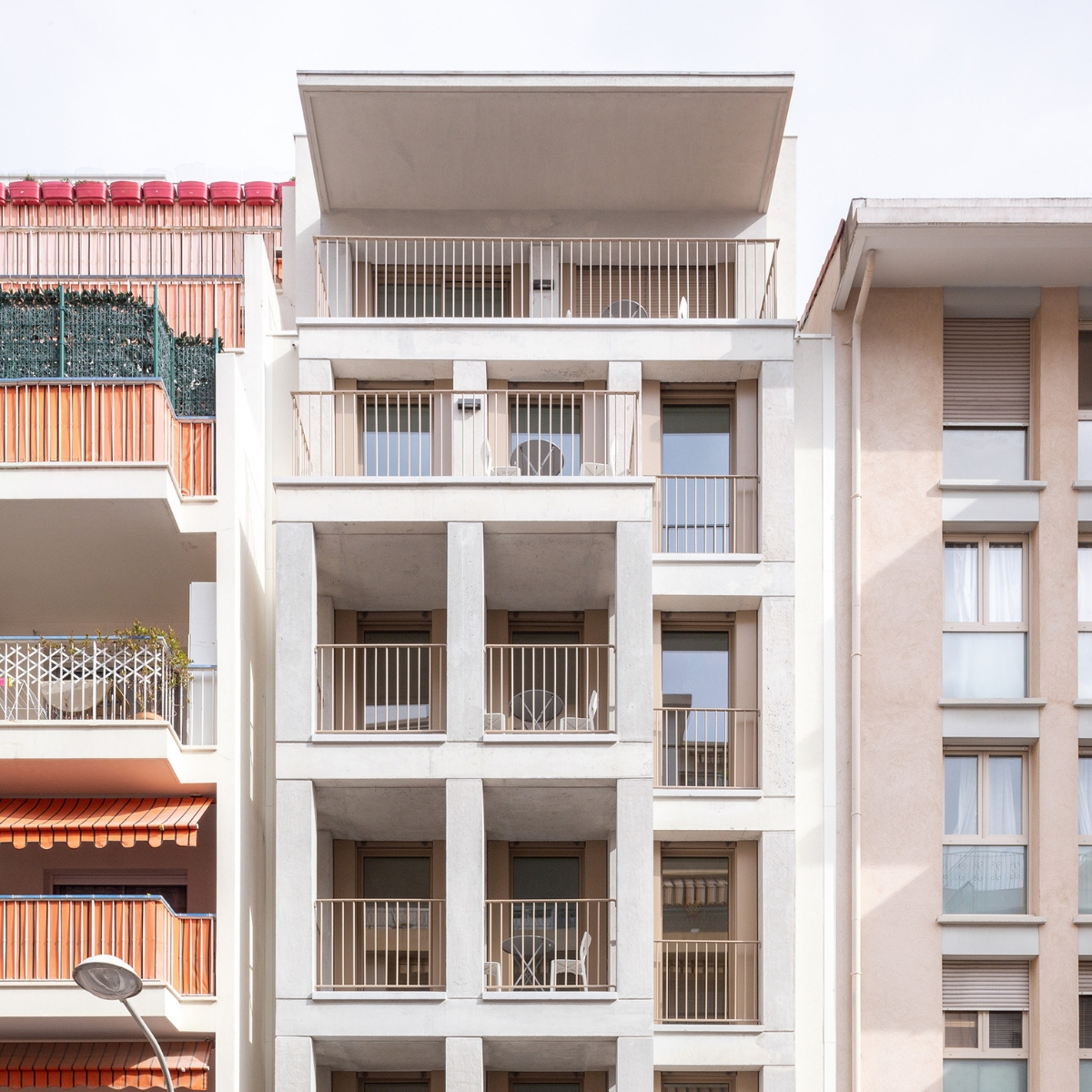
CB: They include social housing in Nice and Mouans-Sartoux plus a primary school, nursery and crèche in Lantosque.
By Alexandre Benoist
 Côteweb 2021, création de site Internet sur Nice