





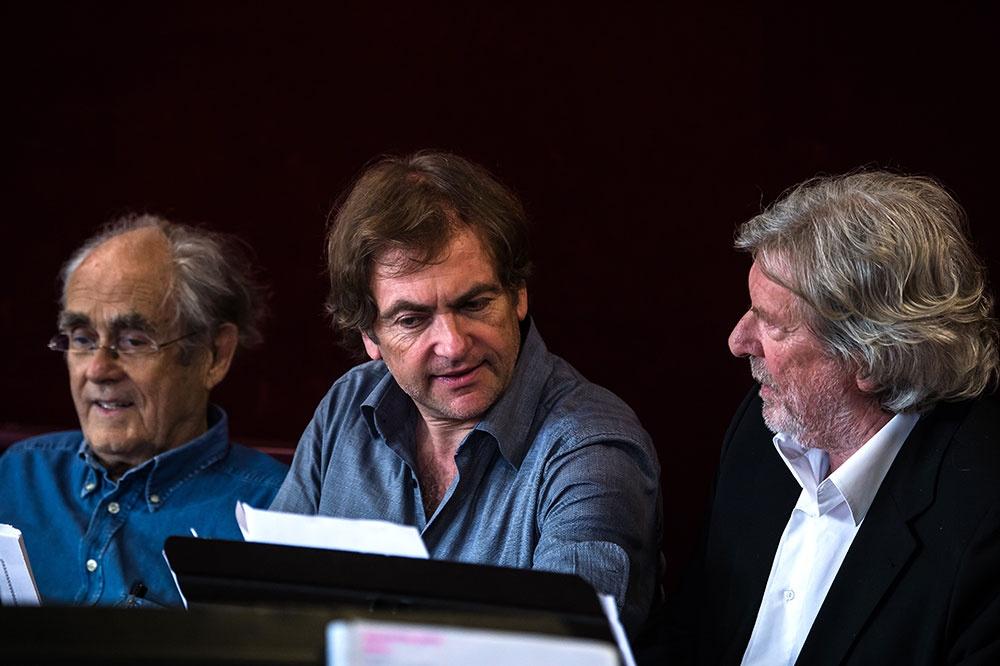
As an author Didier Van Cauwelaert is a familiar figure. Born in Nice of Belgian descent, he has notably won the Prix Goncourt, for Un aller simple (One-Way), and written several plays. But most people are unaware he has also penned successful musicals, and this May and June he is presenting his opera Dreyfus, directed by Daniel Benoin, at the Opéra de Nice.
What made you want to write for music?
It all started when I met Michel Legrand outside the Théâtre des Bouffes-Parisiens. He told me: ”I’d love to do a musical inspired by The Man Who Walked through Walls [a short story by Marcel Aymé; trans.]. Here’s a cassette, tell me what you think.” I’d never written a libretto but the tunes he’d composed told me a story.
How do you go about the writing?
I like to give Michel a summary of the action, then he composes the music, we get together, he plays it and I record it. Then I listen to it over and over again, associating certain airs with specific characters or situations and translating them into words. There’d be no interest in me writing the story first.
Tell us how this opera about the Dreyfus Affair came about.
The idea was born when we were presenting our next creation to Jean-Louis Grinda. Although innocent, Dreyfus was condemned as a traitor. But how to make something new out of that tragedy? So I thought of what went on behind the scenes; putting the emphasis on the plotters’ cynicism in the face of the emotion of a man crushed for reasons of State.
Why tell it from the ”traitor”’s view point?
Esterhazy was a hoodlum but the real swine were the three generals led by Mercier; it was he who planted false military secrets in the officer’s hands. The opera recreates this jubilant trio and Esterhazy’s truculence in the face of a tumultuous public demanding a culprit. In an era of rampant anti-Semitism, Dreyfus was the perfect candidate.












 Côteweb 2021, création de site Internet sur Nice