


Bandol wines are readily classed among the great wines, and so they should be. These are vins de terroir that have managed to retain their authenticity.
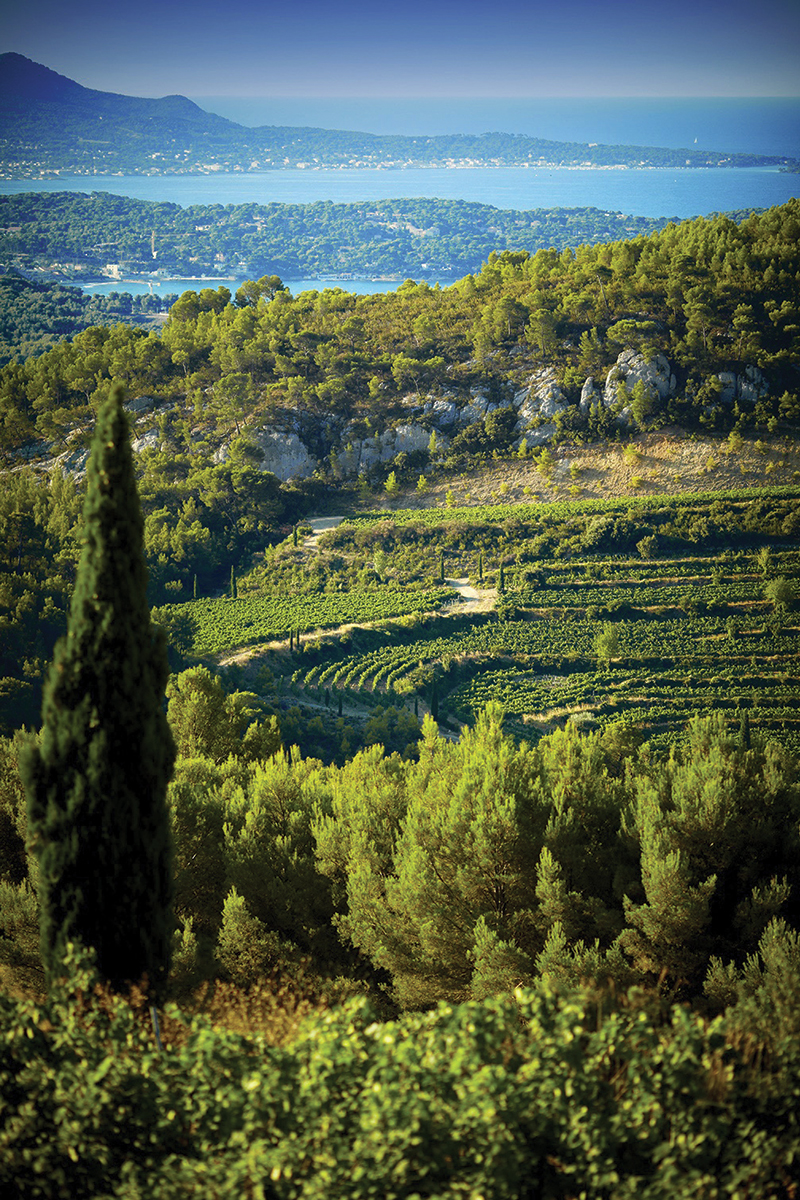
As in the neighbouring Cassis and Marseille areas, vines have been grown on terraced hillsides around Bandol ever since the Phocaeans brought winegrowing to Provence from their native Anatolia around 600 BC. But despite this long history, Bandol was only granted AOC status in 1941. The appellation covers eight communes, so why was the name of Bandol chosen over Sanary-sur-Mer, Le Beausset, Evenos and Ollioules? «Simply because Bandol was the port from which it was shipped to Marseille, on flat-bottomed boats called tartanes, before export from Marseille to the colonies,» says Pascal Perier, who has been researching local history for 25 years. It was in the second half of the 18th century that Bandol gained a reputation, because the wines from these hillsides with their vineyards, pine woods, olive groves and market gardens, travel well: they can withstand a journey of several months without turning to vinegar. They were spoken of as vins de cote, powerful and ageing well – qualities they still have, year after year.
From red to pink
Bandol’s noble characteristics are due to the area’s dry, poor soils. Mourvèdre, a grape variety called Mataro in Cyprus and Monastrelle in Spain, was introduced in the late Middle Ages and settled in as if native-born. It is a hardy, late-ripening variety, often the last to be harvested because it needs to make the most of the autumn sun. The appellation specifications are for 20% to 95% Mourvèdre in rosé assemblages and 50% to 95% in red assemblages. Already well known for its magnificent ruby or crimson reds hinting at autumn, baskets of mushrooms, the scent of leaf mould and wild boar hunts, Bandol has been producing more and more rosé in recent years, simply because it’s successful in France and abroad. «Rosés now account for 72% of output, with 22% reds and 5% whites,» says Guillaume Tari, president of the Association des Vins de Bandol. When young they are drunk chilled and fruity; as the years pass they take on amber or orangey hues and complex aromas of nutmeg and cinnamon.
The legacy of centuries
To get to the heart of Bandol wines one should also explore the whites, mainly made from Clairette, white Ugni and Bourboulenc. The winegrowers love to surprise people with these whites, which they produce only in small quantities. They are often made from grapes grown on north-facing slopes that nonetheless have the benefit of cool sea spray, which adds a hint of ozone and accentuates their fresh flavour. After a clean attack, these complex, harmonious wines reveal notes of white almond blossom, citrus and exotic fruit, with more citrus for a tense finale. The miracle of this typically Provençal appellation lies in the contrast between its poor, gullied soils and the refined elegance of its wines, which will bless any dinner and generally keep well. The winegrowers’ talent counts for much, of course – a fragile heritage passed on down the centuries with rigour and passion.
Par Pierre Psaltis
 Côteweb 2021, création de site Internet sur Nice